Geoedes, the more hidden treasures of nature
Discover the fascinating crystal caves, their formation, colorful diversity, and valuable minerals
Geoedes, the more hidden treasures of nature
Discover the fascinating crystal caves, their formation, colorful diversity, and valuable minerals
What is meant by geodes?
A geode is a natural rock cavity whose inner surfaces are lined with mineral crystals. Geodes differ from simple druses in that they form as closed structures, possess a natural outer shell made of basalt, limestone, sedimentary, or volcanic rock, and contain a crystalline interior that only becomes visible once the geode is opened. Their outer shape is often round, egg-shaped, or irregular. Inside, crystals can develop over millions of years.
Geodes are among the most fascinating and mysterious formations in the world of geology. At first glance, they may seem unremarkable, but their interiors reveal complex crystal structures that have grown over millions of years. The beauty and diversity of geodes have captivated not only scientists but also collectors, artists, and enthusiasts of esotericism for centuries. This page serves as a comprehensive reference for anyone interested in geology, mineralogy, crystals, or natural stones.
The Factors of Crystal Growth
Under the influence of temperature, pressure, chemical saturation, and time, crystals such as quartz, amethyst, calcite, aragonite, pyrite, or zeolites form. Depending on the conditions, crystal growth can produce clear points, phantom-like growth zones, needles, fans, radial structures, and cubes (e.g., pyrite).
Why do geodes look so different?
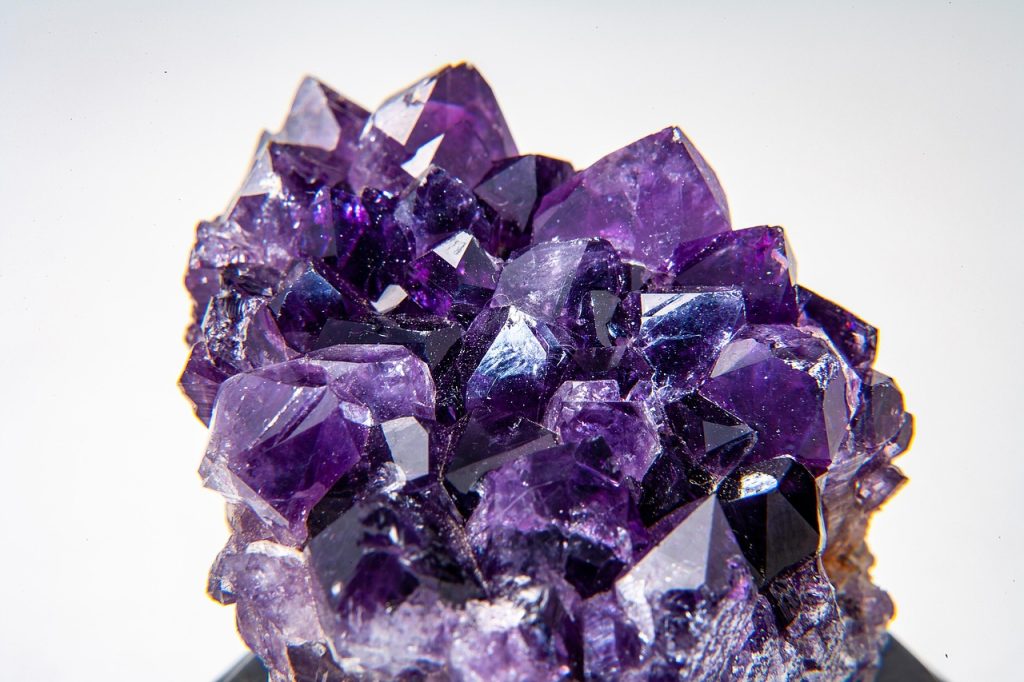
Geodes look so different because many factors influence their formation and appearance. These include the mineral content of the water in which they form, temperature fluctuations, oxidation processes, geological activity, the presence of trace elements, and the duration of their growth. Even a single trace element, such as iron, can turn clear quartz into purple amethyst. All of these influences combined ensure that no two geodes are alike.
Interesting facts about the Amethyst
The formation process of geodes
Geodes form through a long mineralogical process that involves three main stages:
Formation of the cavity
The formation of a cavity in a geode can occur in several ways. It may form through volcanic gas bubbles in lava, the leaching of organic materials, the dissolution of mineral inclusions, or through tectonic stress and the development of cracks in the rock.
Circulation of mineral-rich solutions
Mineral-rich water seeps into the rock, carrying various substances such as silicon, iron, calcium, sulfur, aluminum, and magnesium. These minerals gradually deposit on the inner walls.
The Fascination of Geodes
Geodes have always held a special fascination. At first glance, they may appear unremarkable. A simple stone but when broken open, they reveal a world of sparkling crystals. This combination of outer simplicity and inner splendor captivates collectors, geologists, artists, and nature enthusiasts alike.Geologists value geodes as historical archives: they record chemical compositions, pressure and temperature conditions, and geological events from long-past eras of the Earth. Artists and designers, on the other hand, admire their natural symmetry, color diversity, and crystalline beauty, which lend themselves perfectly to jewelry, sculptures, and interior design. For collectors, each geode is a unique specimen, with its individual crystal formations and colors making it truly special.
Geodes as Earth's Time Capsules
The formation of a geode is an extremely slow process that can take thousands to millions of years. First, a cavity forms—whether through volcanic gas bubbles, the leaching of organic materials, or tectonic cracks. Then, mineral-rich water seeps in, gradually allowing crystals such as quartz, amethyst, calcite, aragonite, or pyrite to grow.
Each geode is thus a natural time capsule. It preserves information about the chemical and geological conditions of its formation. Analyses of crystal structures and mineral compositions provide insights into past volcanic activity, climate conditions, and the geochemical environment. In this way, every geode becomes a unique window into Earth’s history.
Locations & Tips
Geodes are found worldwide, but certain regions are particularly rich in spectacular specimens. In South America, especially Brazil and Uruguay, large amethyst and citrine geodes are common. Mexico is known for quartz, calcite, and zeolites, while Morocco is famous for agate and quartz. In North America, notably Iowa and Indiana, the renowned Keokuk geodes can be found. Namibia and India also yield impressive mineral formations.
For those wishing to search for geodes themselves, rocky areas with basalt lava or ancient limestone formations are ideal. Riverbeds, crumbling rocks, and former lava flows offer particularly good chances. With patience, attention, and a bit of luck, remarkable specimens can be discovered.
Geodes in History & Culture
Even in ancient times, geodes were highly valued. The Romans, Egyptians, and other cultures used them as jewelry, burial offerings, or decorative stones. Their unique aesthetics and the mystery of their interiors made them symbols of the hidden, mystical, and eternal. Today, geodes are appreciated not only in collections and museums but also in art, design, and architecture. They inspire jewelry designers, sculptors, and interior designers alike. In modern esotericism, geodes are also used for meditation, space harmonization, or energy work. Even though their effects are not scientifically proven, their symbolic and decorative significance remains undiminished.
Amethyst: The King of Geodes
Amethyst is considered one of the most popular and fascinating gemstones worldwide, and its geodes rank among the most spectacular natural formations. The deep purple crystals, which develop over millions of years in volcanic cavities, impress not only with their beauty but also with their geological complexity. Few other crystals combine such clear structure, intense color, and natural-historical significance.
On our dedicated amethyst information page, you can learn everything about their formation, geological conditions, rarest color variations, global locations, and special amethyst forms such as cathedrals, roses, skeletal quartz, or amethyst with hematite inclusions.
Insights into different types of Geodes
Find more information about the various geode types here.