Amethyst & Citrine Geodes
Amethyst Geodes: Nature’s Purple Treasures
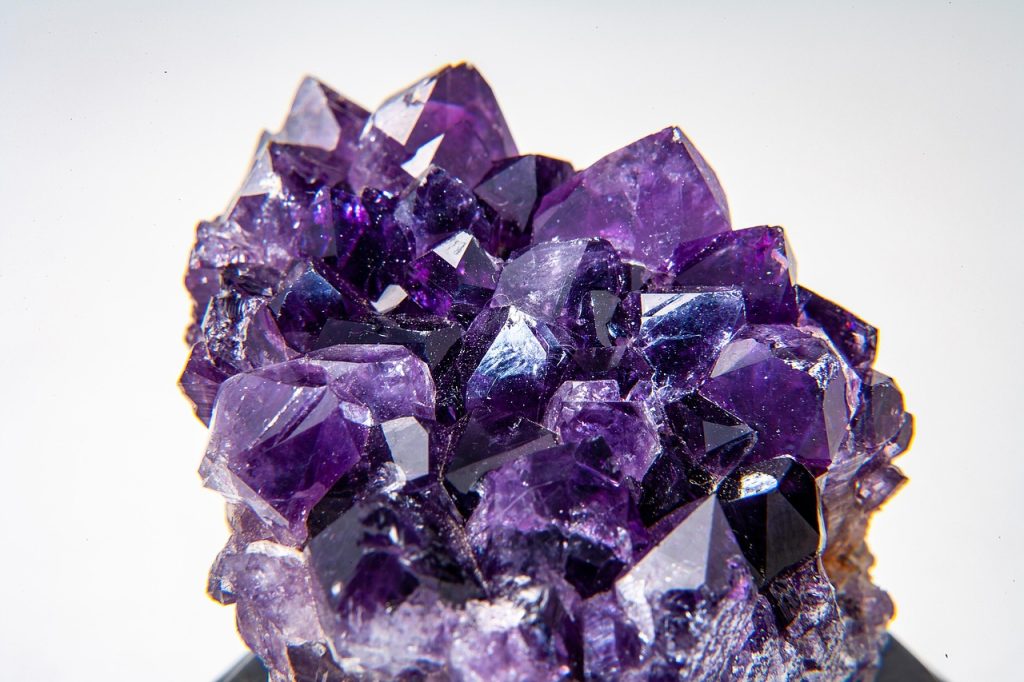
Amethyst geodes are among the most spectacular and globally renowned geodes. Their interiors consist of purple quartz crystals that primarily grow in basaltic gas bubbles. This process spans millions of years: mineral-rich water seeps into the cavities, depositing silicon dioxide, iron, and trace elements, gradually forming the sparkling crystals we admire today.
The beauty of amethyst geodes is impressive not only visually but also mineralogically: each crystal point and color variation tells a story of the conditions under which it formed—from temperature and pressure to radiation and the chemical composition of the minerals.
Crystal Chemistry & Origin of Color
The characteristic purple color arises from iron ions in the crystal lattice and the natural radioactive environment, which irradiates the crystal over thousands of years. Depending on the intensity and duration of this exposure, shades range from pale lavender to medium violet and deep “Deep Purple.” In rare cases, the presence of hematite creates reddish-purple hues, which are especially prized by collectors.

Shapes & Special Features
Amethyst geodes occur in a wide variety of shapes. These include amethyst cathedrals—tall druses with perfectly formed crystal points as well as hemispherical geodes and druse slabs, often used for decorative purposes. Additionally, candle holders and sculptural geodes are found, frequently accompanied by other minerals such as calcite or goethite. Particularly rare special forms, such as amethyst roses, flower amethysts, or skeletal quartz amethyst, highlight the diversity of these crystal formations.
Each geode shape reflects the uniqueness of its crystallization, making it a distinctive collector’s piece. High-quality amethyst geodes are recognized by their uniform, intense color, clear and well-formed crystal points, and transparent crystal structure. Equally important are minimal fractures, an intact basalt shell, and occasionally rare mineral companions, which further enhance the overall appearance.
Citrine Geodes – Sun-Kissed Diversity
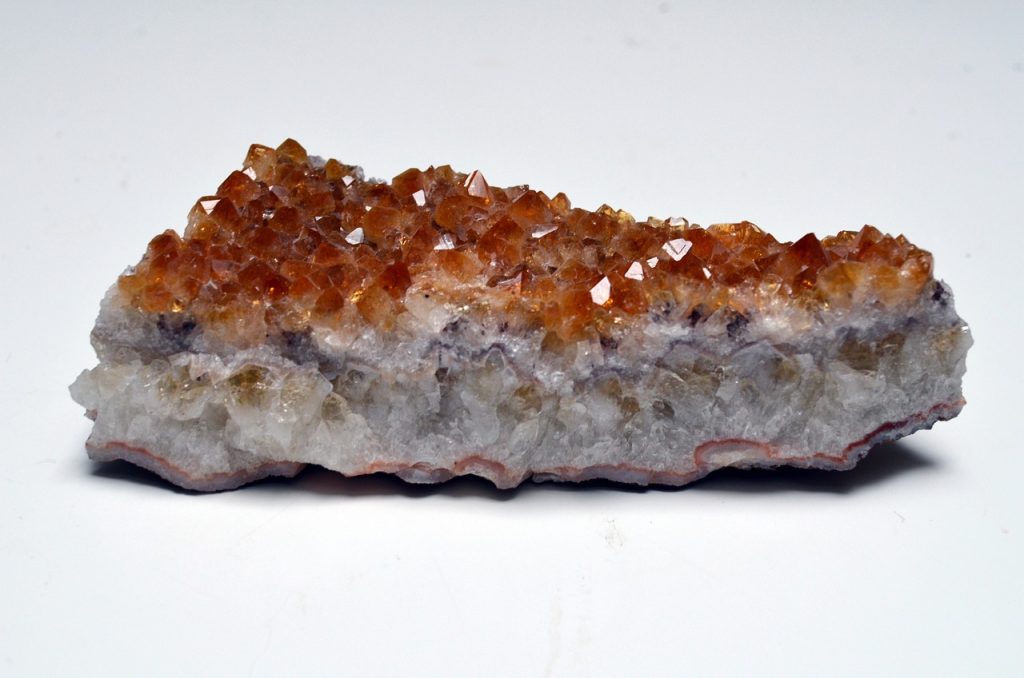
Citrine geodes are among the particularly fascinating varieties of quartz. Their characteristic yellow-golden color radiates warmth and gives them a distinctive appeal. Natural citrine is rare and forms when quartz changes color over millions of years under high temperatures and pressure, with iron ions and minimal natural radiation playing a role. However, many citrines on the market are actually heat-treated amethysts, where heat transforms the color into vibrant orange to yellow tones. Natural citrine is often lighter and more subtle in color, making it more valuable due to its rarity.
Crystal Chemistry and Mineralogy
Citrine is a variety of quartz (SiO₂) that contains iron as the color-causing element. The crystals often form sharp, prismatic shapes, can be arranged in radial patterns, or display zonal growth structures. Inclusion minerals and sometimes skeletal crystals make each geode a unique, naturally created work of art. The chemical stability and hardness of quartz (Mohs hardness 7) also make citrine geodes robust and durable, making them appealing to collectors, decorators, and scientific researchers alike.
Formation & Geology
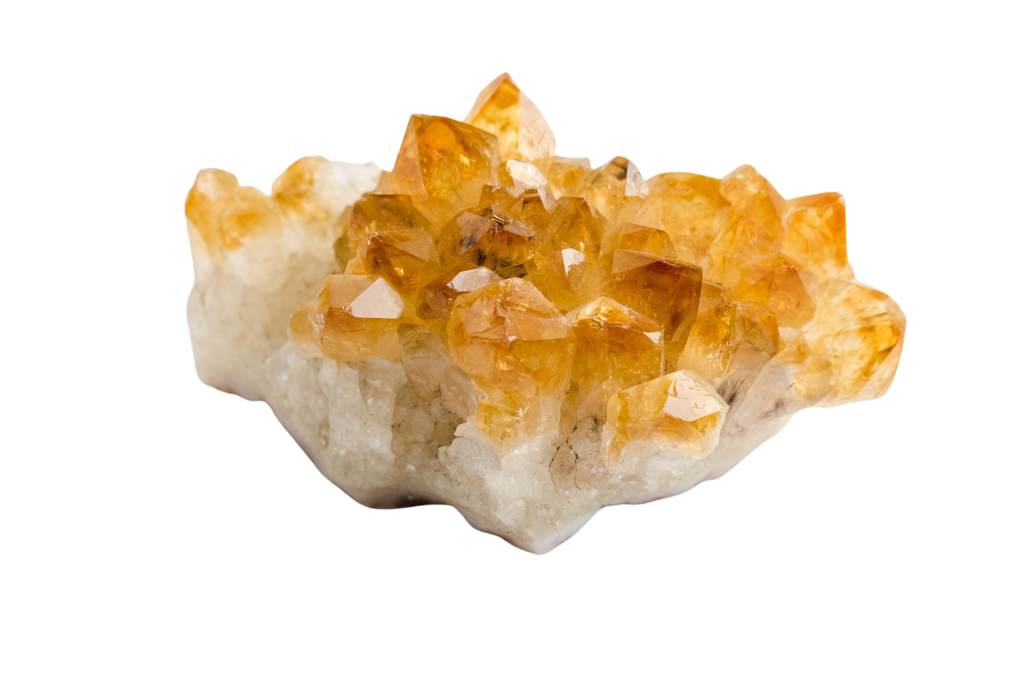
The formation of citrine geodes is a complex geological process that takes several million years. Initially, cavities form in the rock, often through gas bubbles in basaltic lava or tectonic stresses and cracks in sedimentary rocks. Mineral-rich water then seeps into these cavities, carrying silicon, iron, calcium, and trace elements. Under ideal conditions, these substances deposit on the inner walls, and over thousands of years, the characteristic citrine crystals gradually crystallize.
A particularly important factor for the coloration is the iron content. Natural citrine forms when iron ions are incorporated into the quartz crystal lattice under moderate heat and pressure. In some geodes, natural environmental radiation is sufficient to color the crystals, producing the typical yellow-golden tones, ranging from pale lemon yellow to intense orange hues. However, many citrines on the market are actually “heated amethysts,” where amethyst crystals are transformed into vibrant golden-orange tones by heat (between 500 and 600 °C). Natural citrine, in contrast, is often lighter, more subtly colored, and much rarer, making it particularly valuable.
Discover More: The Fascinating World of Agate, Quartz & Smoky Quartz Geodes
If you’ve been captivated by the variety and crystalline beauty of amethyst and citrine geodes, it’s worth exploring another significant group of natural geodes. Agate, quartz, and smoky quartz geodes display entirely different forms of crystallization, coloration, and geological development—from color-banded agate layers to clear rock crystals and deeply tinted smoky quartz.
Discover More: The Fascinating World of Agate, Quartz & Smoky Quartz Geodes
If you’ve been captivated by the variety and crystalline beauty of amethyst and citrine geodes, it’s worth exploring another significant group of natural geodes. Agate, quartz, and smoky quartz geodes display entirely different forms of crystallization, coloration, and geological development—from color-banded agate layers to clear rock crystals and deeply tinted smoky quartz.